Cute Bunny Floral Embroidery Papers: A Pro Review
As an embroidery designer who spends most of my days digitizing logos and selecting assets for small business merchandise, I am always on the lookout for graphics that bridge the gap between digital art and tangible thread. Recently, I took a close look at Cute Bunny Floral Embroidery Papers. While the product listing categorizes these as Backgrounds and Graphics, my immediate instinct was to evaluate their potential beyond simple print usage. Could these high-resolution seamless patterns translate effectively into the world of commercial embroidery? For boutique owners, Etsy sellers, and apparel decorators, the answer lies in how well a digital asset adapts to the physical constraints of needle and fabric.
First Impressions: Visual Personality and Brand Fit
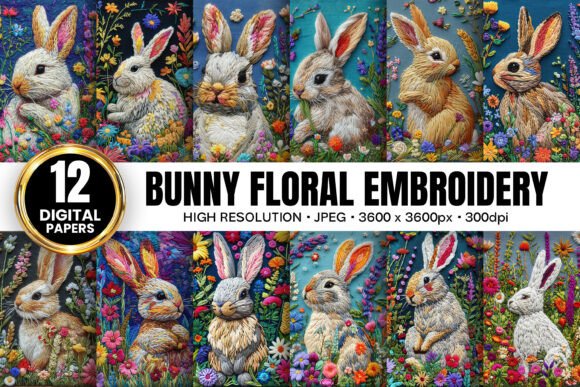
Upon reviewing the preview images and the description of Cute Bunny Floral Embroidery Papers, the aesthetic is undeniably playful yet refined. The combination of a bunny motif with floral elements suggests a brand identity that is friendly, approachable, and slightly rustic. This visual personality is perfect for specific market niches. Imagine a local bakery wanting to add a charming touch to their staff aprons, or a florist looking for a unique logo accent on tote bags. The design feels handmade, which aligns perfectly with the current consumer demand for authentic, artisanal branding.
However, from a professional standpoint, "cute" can sometimes mean "busy." In embroidery, excessive detail can lead to stitching issues. The key question is whether the floral details and the bunny silhouette are distinct enough to hold up when converted into a machine embroidery design. The fact that these files are provided at 300 DPI in JPG format (3600 x 3600 pixels) is a strong starting point. High resolution is critical when tracing or digitizing a graphic for embroidery, as it allows us to see clear edges for stitch placement without pixelation.
Real-World Business Applications
Let's move beyond theory and discuss where Cute Bunny Floral Embroidery Papers could genuinely add value to a small business's product line. Because these are seamless patterns, they offer versatility that single-logo vectors often lack.
- Embroidered Patches: This is perhaps the strongest use case. A circular or shaped patch featuring a cropped section of the bunny and floral pattern could serve as a premium add-on for hats or jackets. Patches allow for high stitch density without distorting the base garment.
- Staff Uniforms and Aprons: For a pet grooming salon or a children's boutique, placing a subtle iteration of this pattern on the pocket of an apron creates instant brand recognition. It feels less corporate and more community-focused.
- Tote Bag Design: Canvas tote bags are a staple for craft fairs and retail shops. Using this graphic as an all-over print background with a solid embroidered logo on top creates a layered, professional look.
- Cap Embroidery: While challenging, a simplified version of the bunny head could work beautifully on the front panel of a dad hat, appealing to a younger demographic.
- Product Packaging Accents: Even if not embroidered, these digital embroidery file sources can be printed on hang tags or tissue paper to maintain visual consistency across your small business merch.
Technical Considerations for Production
Before rushing to hoop up your machine, there are critical technical factors to consider. Since Cute Bunny Floral Embroidery Papers are sold as raster images (JPG) rather than pre-digitized stitch files, you cannot simply load them into your embroidery machine. You must first digitize them or hire a professional to do so. This step is non-negotiable for maintaining quality.
When adapting these graphics for custom apparel, pay close attention to stitch density. Floral elements often contain many small leaves and petals. If these are too small or too close together, they will merge into a solid blob of thread once stitched. I recommend testing the design in black and white first to check contrast and spacing. If the details disappear in grayscale, they will likely vanish in thread as well.
Furthermore, consider the hoop size limitations. While the source image is large (3600 x 3600 pixels), your physical embroidery hoop might only be 4x4 inches. You will need to decide whether to stitch a small, detailed excerpt of the pattern or scale it down significantly. For cap embroidery or curved surfaces, simpler is almost always better. Complex floral outlines can cause registration issues on curved fronts.
Fabric and Thread Challenges
The success of this design also depends heavily on the substrate. On smooth, tightly woven cotton or twill, the fine lines of the bunny and flowers will pop. However, on textured fabrics like fleece, terry cloth, or heathered poly-blends, those delicate floral details may get lost. Additionally, dark uniforms present a challenge; you may need to use a heavy-duty stabilizer and potentially an underlay of white thread to ensure the thread colors remain vibrant and true to the original graphic.
Washability is another concern for items like apron embroidery or work shirts that see frequent laundering. High-density satin stitches covering large floral areas can become stiff or crack over time. A fill stitch or a mix of stitch types might be necessary to ensure durability without sacrificing the soft, handmade feel of the design.
Impact on Brand Identity and Customer Trust
In the crowded marketplace of handmade goods and local businesses, visual consistency is king. Utilizing a cohesive graphic like Cute Bunny Floral Embroidery Papers across various touchpoints—from a stitched patch on a cap to a printed label on packaging—strengthens brand identity. It signals to the customer that attention to detail matters. When a customer receives a product with a well-executed embroidered element, it elevates the perceived value of the finished product.
Moreover, using unique, non-generic graphics helps avoid the "cookie-cutter" look that plagues many online stores. By taking a digital background and transforming it into a tactile embroidered asset, you create a unique selling proposition. This level of customization fosters buyer engagement and trust, as it demonstrates that the brand invests in quality design assets rather than relying on free, overused clipart.
Final Designer Notes and Recommendations
If you are planning to incorporate Cute Bunny Floral Embroidery Papers into your commercial workflow, here is my checklist for success:
- Verify Licensing: Always confirm the commercial licensing terms included in the ZIP file before selling products made with these designs.
- Create a Printable Mockup: Before stitching, place the graphic on a photo of your intended garment to visualize scale and placement.
- Test on Scrap Fabric: Never run a production batch without testing the digitized version on the actual fabric you intend to use.
- Check Contrast: Ensure there is enough contrast between the thread colors and the fabric color, especially for the finer floral details.
- Simplify for Small Sizes: If making small patches, consider removing the smallest floral elements to prevent stitching errors.
In conclusion, while Cute Bunny Floral Embroidery Papers are technically sold as digital backgrounds, their potential for transformation into high-quality embroidered merchandise is significant. With careful digitization, thoughtful material selection, and strategic placement, this collection can become a cornerstone of a charming and professional brand identity for cafes, boutiques, and creative studios alike.